Open Source Open-source release Milestone: 22 Aug 2026

HAIEC makes deterministic AI application source security available to developers

AI AppSec gives development teams repeatable static checks of AI-specific security patterns before changes enter production.

122Detectors
79Security checks
MITOpen-source license
PublishedMilestone22 Aug 2026
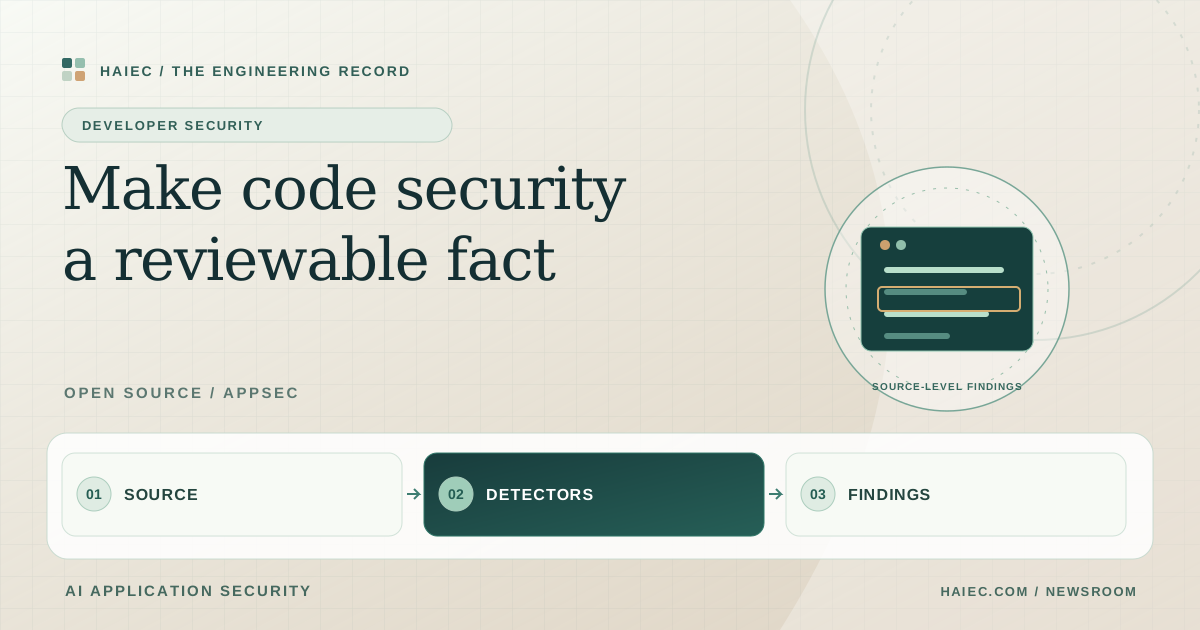
Diagram of SOURCE to DETECTORS to FINDINGS for Open source / AppSec
HAIEC editorial system illustration β€’ Vector artwork, based on the technical subject of this announcement

The open-source AI AppSec tool supports offline static analysis, structured findings, and integration into CI and agent workflows.

At a glance

AI AppSec gives development teams repeatable static checks of AI-specific security patterns before changes enter production.

Security evidence at the source layer

In August 2026, HAIEC published AI AppSec, an open-source developer security tool focused on AI applications and agent source code. It uses a deterministic static analysis approach to surface source-level findings that teams can evaluate before merging or deploying code.

Practical for developer workflows

The documented initial release bundles 122 detectors covering 79 security checks, using Semgrep as its analysis engine. Teams can run the tool against repositories, preserve structured findings, and integrate source checks into CI or MCP-compatible development workflows. Once configured, normal scans can run offline.

A component of a broader assurance model

AI AppSec addresses source-code evidence. It does not establish runtime behavior, tenant boundary correctness across all paths, or human delegation of consequential choices. HAIEC positions these as separate evidence and control questions so source findings can become part of a wider assurance record without being overstated.

The attack surface is changing with agentic software

AI applications create new pathways from untrusted input to tools, model context, business actions and external data. General static analyzers remain essential, but agent integrations also benefit from detection patterns specific to prompt injection sinks, tool invocation logic and insecure data handling.

AI AppSec responds to that need with a public, Semgrep-backed security rulepack for AI application code. Its checks can surface known risky implementation patterns before a change is merged or deployed, making the review more repeatable across developers and repositories.

Engineering-oriented findings

The documented initial release lists 122 detectors across 79 checks. Its output is intended for developers and security reviewers, not simply for creating a headline count. A useful result names the source location, relevant rule and context that makes the pattern worth investigating.

Teams can integrate analysis into selected developer workflows and carry structured results into review. The tool is suited to targeted source-level investigation; a clean report does not prove that model outputs, effective IAM grants or live actions are safe.

Contribution to the HAIEC security ecosystem

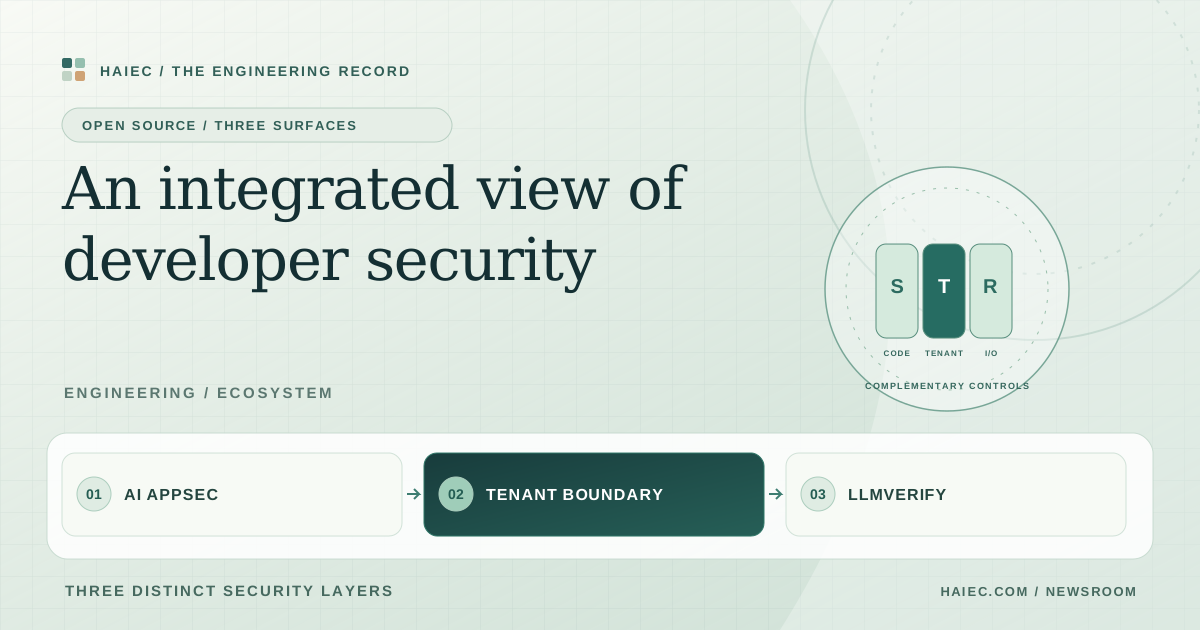
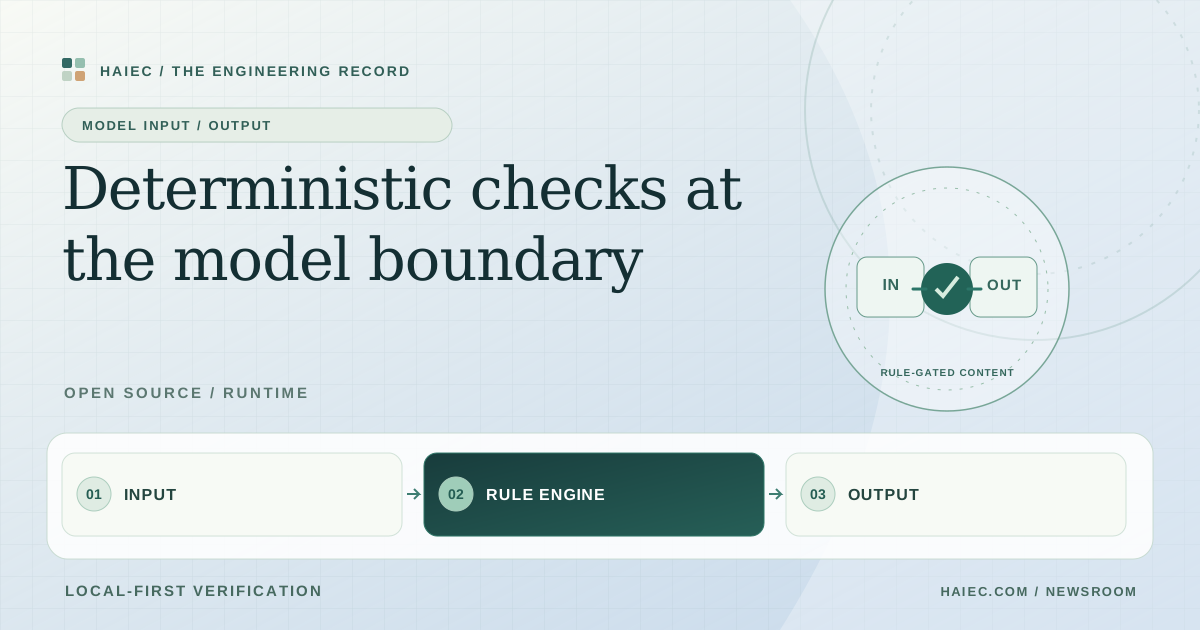
HAIEC maintains complementary controls for MCP tenant isolation and runtime model input and output. Together they address different parts of the AI application attack surface while preserving the boundaries of each method.

This open-source engineering approach supports early detection and technical transparency. Enterprise assurance builds on it by asking which consequential actions are code-capable, authorized, delegated and actually evidenced within the evaluated system.

Editorial record

This HAIEC company announcement describes a documented milestone and links to underlying technical or public sources. Reported metrics are scoped to their referenced release or assessment; historic milestone dates do not replace this article’s publication date.
← All HAIEC announcementsTalk to HAIEC β†—