Open Source Developer adoption Milestone: Sep 2026

LLMVerify records more than 27,000 npm downloads in September as developer adoption expands

HAIEC reports a September 2026 npm registry milestone for its local-first LLM verification toolkit, extending the reach of deterministic AI safety controls.

50K+September npm downloads · company-reported
v1.6.1Current documented package
MITOpen-source license
PublishedMilestoneSep 2026
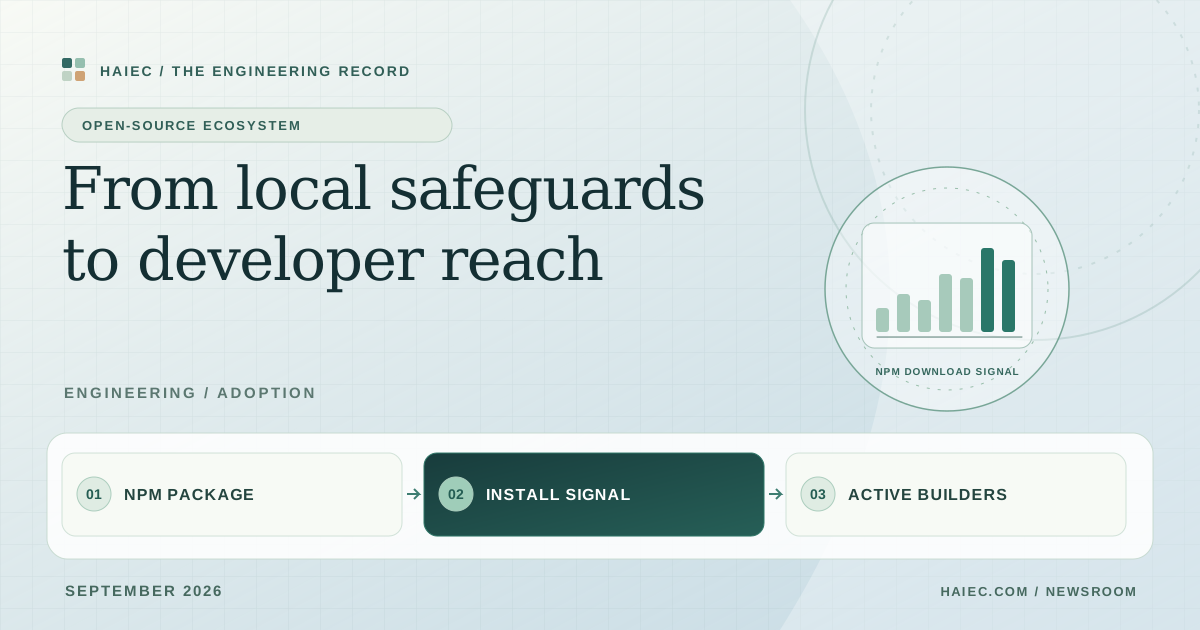
Diagram of NPM PACKAGE to INSTALL SIGNAL to ACTIVE BUILDERS for Engineering / Adoption
HAIEC editorial system illustration • Vector artwork, based on the technical subject of this announcement

The September 2026 registry milestone highlights growing interest in local-first verification and auditable developer controls.

At a glance

HAIEC reports a September 2026 npm registry milestone for its local-first LLM verification toolkit, extending the reach of deterministic AI safety controls.

An adoption milestone for open-source AI verification

The public npm registry reports 27,933 downloads of the llmverify package for September 2026 (downloads API, 1-30 September). The threshold reflects registry download activity, not a count of distinct users, production deployments or paying customers. HAIEC treats download activity as an indicator of open-source reach, distinct from verified enterprise adoption.

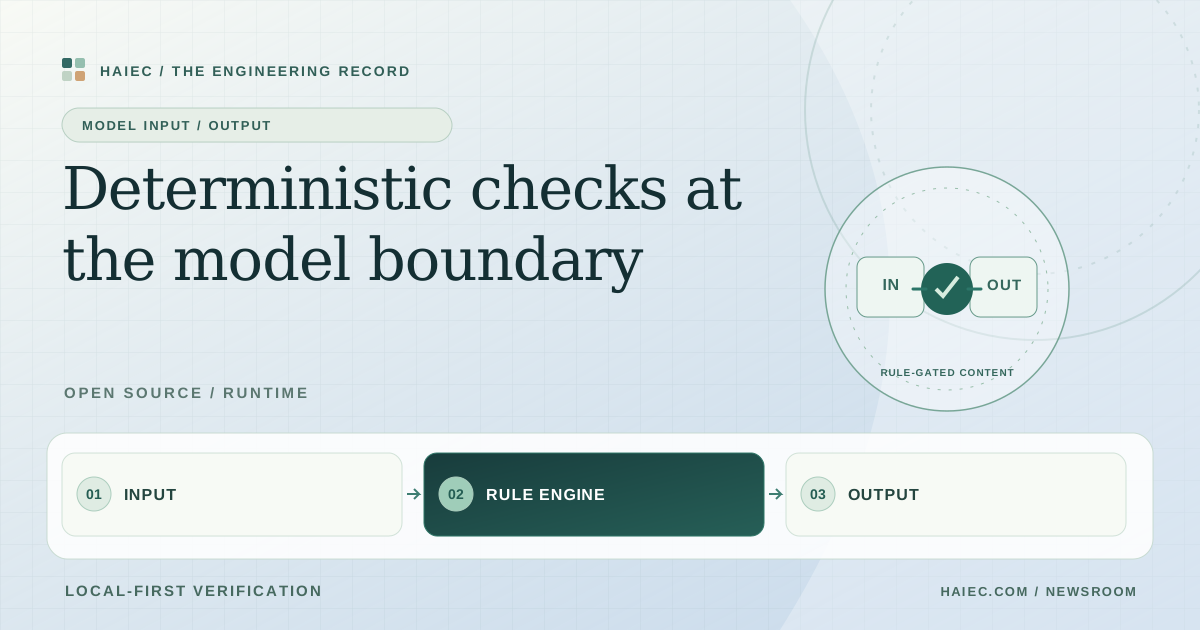
Deterministic safeguards for model inputs and outputs

LLMVerify is a local-first developer toolkit that examines known prompt-injection patterns, common personally identifiable information formats, output risk indicators and behavioral measurements. Its baseline verification uses deterministic rules rather than assigning a second generative model to judge the first. It exposes explicit limitations instead of promising to establish factual truth or detect every unknown attack.

A broader public engineering commitment

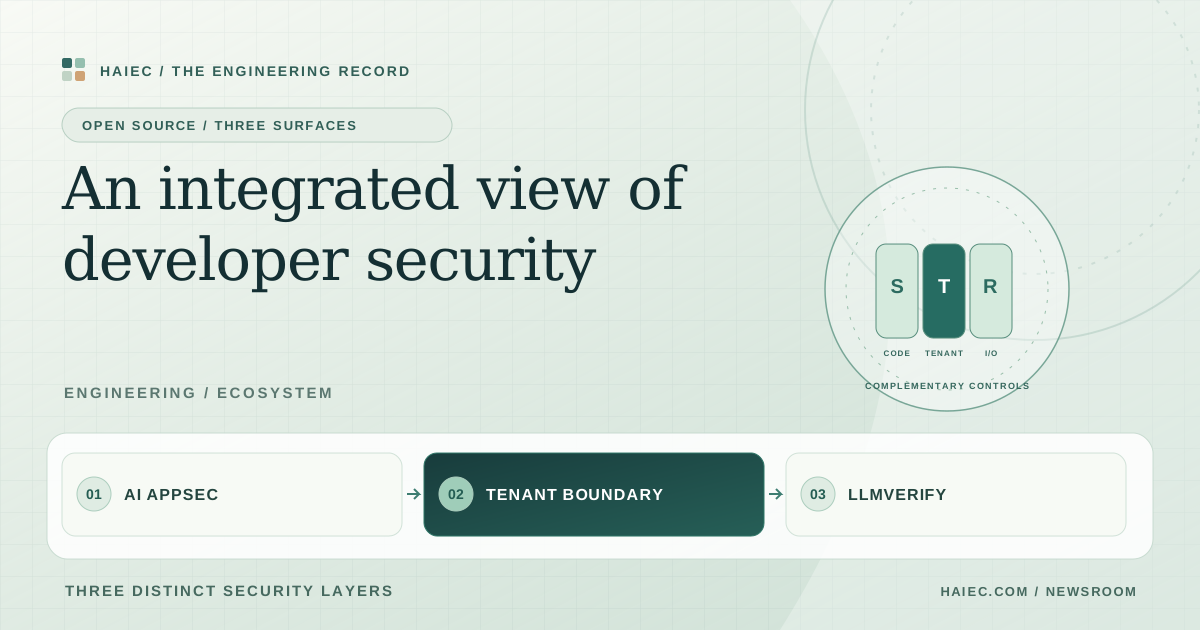
Together with AI AppSec and MCP Tenant Isolation, LLMVerify is one of three independently usable open-source packages within HAIEC’s developer security family. These tools provide focused inspection at model I/O, source-code and tenant-boundary layers, while HAIEC’s broader enterprise assurance platform addresses a different question: whether delegated AI capabilities, policy and evidence align across consequential action paths.

What an adoption signal measures

The public npm registry reports 27,933 downloads of the llmverify package in September 2026, confirmed directly from the npm download statistics endpoint linked in this article. Download volume measures registry activity. It is not interchangeable with unique developers, production installations, repeat usage or contracted customers.

The reason the milestone matters is straightforward: engineering teams increasingly need mechanisms for screening model interactions without introducing another probabilistic answer into the trust chain. Local verification libraries offer a route for developers to make selected checks repeatable and inspectable.

The engineering premise behind LLMVerify

An AI application can pass source scanning yet still return data that should not be exposed in a model response. LLMVerify targets the input and output boundary, using defined patterns to flag selected prompt-injection signatures, common personal-data formats and other configured content risks. Its local baseline does not need a second LLM to declare whether the first model’s response is safe.

By design, a deterministic pattern match is a bounded technical observation. It can detect what the configured rules describe, but it does not establish comprehensive protection from novel attacks, hallucinations or information leakage. Surfacing that distinction enables teams to treat library output as evidence rather than as a substitute for security review.

A wider open engineering strategy

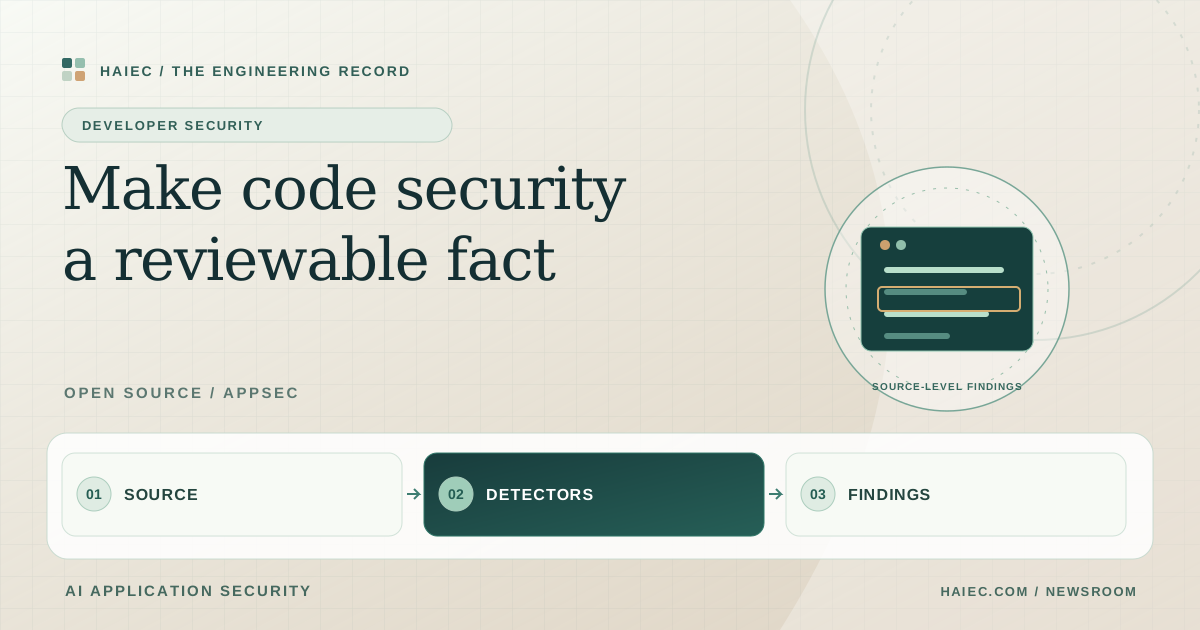
LLMVerify forms the runtime-content layer in HAIEC’s developer security portfolio. AI AppSec addresses source patterns, while MCP Tenant Isolation addresses code paths where data or resources may cross tenant boundaries. Taken together, the packages make multiple categories of risk easier to examine in day-to-day engineering workflows.

HAIEC’s enterprise platform has a separate mandate: reconciling source-backed action capability with policy, effective access, delegated discretion and qualified observations. Open-source adoption supports the surrounding ecosystem without converting package download counts into enterprise platform market share.

Editorial record

This HAIEC company announcement describes a documented milestone and links to underlying technical or public sources. Reported metrics are scoped to their referenced release or assessment; historic milestone dates do not replace this article’s publication date.
← All HAIEC announcementsTalk to HAIEC ↗