Research Research publication Milestone: Dec 2025

HAIEC publishes the Instruction Stack Audit Framework for AI accountability

The first ISAF research publication introduced a nine-layer view of AI instruction lineage and an implementable audit protocol.

9Instruction layers
127Audit checkpoints
DOIArchived preprint
PublishedMilestoneDec 2025
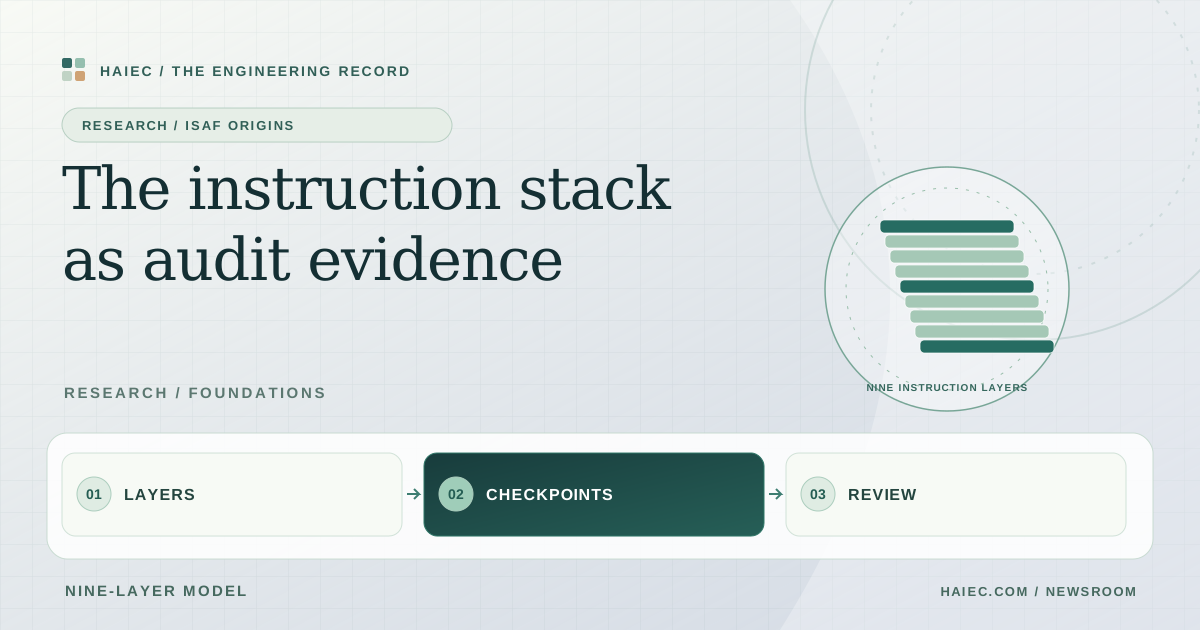
Diagram of LAYERS to CHECKPOINTS to REVIEW for Research / Foundations
HAIEC editorial system illustration • Vector artwork, based on the technical subject of this announcement

The initial preprint offers a technical model for auditing how AI instructions and system layers influence accountability.

At a glance

The first ISAF research publication introduced a nine-layer view of AI instruction lineage and an implementable audit protocol.

A more technical view of AI accountability

In December 2025, HAIEC’s research foundation expanded with the Instruction Stack Audit Framework (ISAF), a technical preprint examining how AI behavior depends on more than a visible prompt or final output. The work traces multiple abstraction layers that influence system behavior and the evidence that reviewers need to interrogate them.

A practical audit protocol

The original framework describes nine instruction layers and a 127-checkpoint audit protocol. It was released as an openly archived preprint with a persistent DOI, helping researchers and practitioners cite and examine the methodology. The framework is an author-issued technical work, not a claim of journal peer review or regulatory certification.

A foundation for subsequent engineering

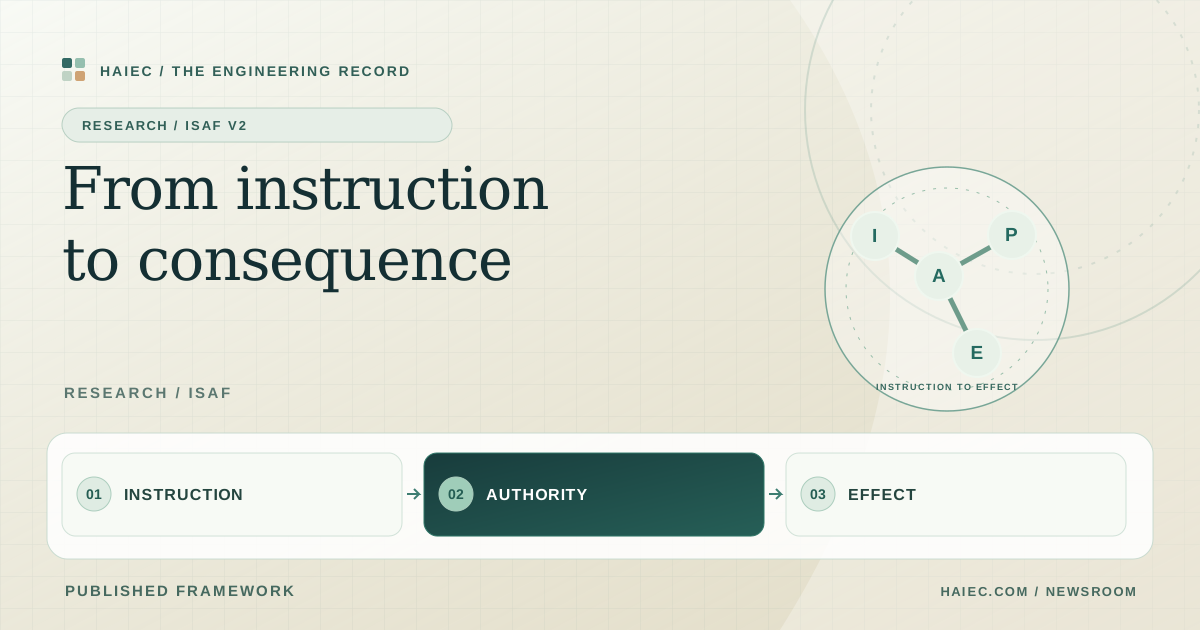
The ISAF research informed the ISAF Logger implementation and later research into delegated authority and consequence-aware assurance. ISAF v2 extends the conceptual scope; its archival publication remains distinct from the published v1 preprint.

Why the visible prompt is not the whole system

In a modern AI deployment, the final user message is only one of several sources influencing the model. System instructions, developer messages, tool specifications, retrieved content and surrounding application logic can all constrain or redirect behavior. An accountability model that treats the final prompt as the entire cause of an outcome is incomplete.

The original Instruction Stack Audit Framework introduced a structured examination of instruction layers. It sought to give assurance practitioners a way to ask where an instruction entered, how it was transformed or prioritized, and what evidence should survive for subsequent review.

A published protocol and reference point

The author-issued December 2025 preprint described nine instruction layers and 127 checkpoints, with a persistent archival DOI. This creates a citable reference that can be discussed, challenged and extended without relying on ephemeral descriptions or marketing content.

The protocol is an audit methodology, not a claim that applying a checklist automatically proves a system safe. It emphasizes the kinds of records, provenance and decision logic an assessor should seek when establishing what occurred inside a configured system.

An evolving methodology

The initial research influenced HAIEC’s approach to recording instruction and execution context. Subsequent work has focused increasingly on the interaction between instruction lineage and the separate authority needed to cause effects in connected systems.

ISAF v2 expands that line of inquiry toward consequences, permissions, delegation and operational evidence. The original framework remains a distinct historical contribution, with its own DOI and publication status.

Editorial record

This HAIEC company announcement describes a documented milestone and links to underlying technical or public sources. Reported metrics are scoped to their referenced release or assessment; historic milestone dates do not replace this article’s publication date.
← All HAIEC announcementsTalk to HAIEC ↗